

Commentary
Rym Momtaz
{
  "authors": [
    "Rym Momtaz"
  ],
  "type": "commentary",
  "blog": "Strategic Europe",
  "centerAffiliationAll": "",
  "centers": [
    "Carnegie Endowment for International Peace",
    "Carnegie Europe"
  ],
  "englishNewsletterAll": "",
  "nonEnglishNewsletterAll": "",
  "primaryCenter": "Carnegie Europe",
  "programAffiliation": "",
  "regions": [
    "Europe",
    "Russia"
  ],
  "topics": [
    "Foreign Policy",
    "EU"
  ]
}

Source: Getty
The EU’s responses to two recent incidents expose the gulf between European perceptions and capabilities. Unless the union can bridge that gap, it will never become a real geostrategic power.
Many European leaders are still not playing in the geopolitical big league. Just look at their subpar responses to the mass influx of migrants from Morocco to the Spanish exclave of Ceuta in July and to Russia’s attempted armed drone attack on a Romanian gas project in August.
The sustained unconventional warfare being waged against the EU underscores a core paradox. Brussels and individual EU members are targets both because they are seen as acting resolutely in defense of their interests and way of life and because they are seen as vulnerable and eschewing confrontation.
Two fears cripple Europe’s responses and undercut some of the unprecedented military and financial moves it has made: the appeal of the far right for a rising portion of voters and the need to confront a major power. Both are stoked by vast swaths of the media that lean into populist clickbait instead of equipping voters with the necessary strategic context to mount a defense.
Simply put, European leaders suffer from cognitive dissonance. They perceive the EU as a superpower on a par with the United States and China but cannot get a seat at the table in negotiations on European security. And nothing they have done or are doing goes far enough to change the calculus of their detractors in Washington or of their adversaries in Moscow, Beijing, or beyond.
Moscow refuses to engage in serious negotiations with the Europeans over an end to the war in Ukraine and the continent’s security because they are not seen as formidable enough. In Washington, at the best of times, the Europeans are perceived as nice sidekicks but not as game changers. And these are not the best of times for Europeans in Washington.
Optimists will immediately counter that though the road Europeans take is long and winding, it has led to some unprecedented uses of the military, economic, political, and diplomatic tools that states have at their disposal both as individual actors and as EU members.
True as that may have been in the EU’s old geopolitical reality, Europe is now lagging behind the speed and intensity of the belligerence it is confronting. Being graded on a curve is not a luxury Europeans can currently afford. And even on a curve, the Europeans failed the two stress tests they were subjected to this summer.
While the exact sequence of factors that produced the Ceuta crisis are still being determined, with suspicions about more or less active roles played by Russia, Israel, and even the United States and Morocco, the leaders of Denmark, Finland, Germany, and Italy didn’t have the strategic foresight to look beyond populist headlines about migration. They immediately gave in to their domestic political worries and put on a spectacle of division and finger pointing that confirmed just how vulnerable the EU is to the weaponization of migration.
And when an attempted drone attack was launched on the Romanian gas project Neptun Deep, European Commission President Ursula von der Leyen referred to the incident euphemistically as “hybrid warfare”—testing the limits of the concept. Categorizing in such a way an attempt to blow up critical energy infrastructure in an EU member state signals just how skittish the union continues to be.
If European leaders are afraid of calling a spade a spade by bluntly attributing attacks and distinguishing the strategic forest from the populist tree, the EU will not graduate to the rank of a real geostrategic power.
These are no longer abstract issues discussed in strategic circles while hundreds of millions of Europeans continue to enjoy peace, security, and prosperity. The uptick of Russian sabotage and unconventional warfare is real.
Since 2022, 151 instances of sabotage and shadow warfare against Europe have been either publicly attributed to Russia or suspected of being carried out by Russia or Russia-adjacent actors. Between 2023 and 2024, the number of such attacks quadrupled, and the tally for the following years continued on an upward curve. That is in addition to the daily informational warfare and intense political and election interference Europe is subjected to from various quarters.
The response to such aggression does not fall to politicians alone, though. The media also play their part. Russian unconventional warfare rarely gets the prime billing that stories about migration or the cost of living receive. This is especially true for broadcast media but is increasingly the case for newspapers and news websites as well.
The attack in Romania did not lead the national news across the union—and certainly not as an instance of a Russian attack. Media coverage of the Ceuta crisis rarely went beyond the well-worn populist talking points about migration.
Meanwhile, without a citizenry that is properly informed about events and threats that are accurately presented to it, democracies cannot sustain military and financial aid in a long war of attrition.
The EU and its members have provided much more military and financial assistance to Ukraine, and for much longer, than anyone expected. But this assistance is constantly threatened by elections and the economic pressures the bloc is under from climate change, the trade war waged by U.S. President Donald Trump, Chinese dumping, and the repercussions of the war on Iran.
Time is on no one’s side in the current global context. The EU’s sanctions on Russia and its military and economic aid to Ukraine are hurting Russia badly, but this support isn’t pain free for European economies. Europe’s current strategy has had the benefit of enabling Kyiv to withstand the Russian assault, but this cannot be an open-ended approach.
Beyond Ukraine, the EU needs to up its game. Iceland’s decision in a referendum on August 29 not to restart EU accession talks should be an electric shock. Despite its formidable trade heft, its enviable standard of living, and its respectable defense industry, the EU’s geopolitical proposition wasn’t enough to close the deal for the Icelanders. Unless it gets much more comfortable with throwing its weight around, the EU will quickly be condemned to remain a second-tier geopolitical player.
Subscribe to Strategic Europe, delivered every Tuesday and Thursday!

Editor in Chief, Strategic Europe
Rym Momtaz is the editor in chief of Carnegie Europe’s blog Strategic Europe. A multiple Emmy award-winning journalist-turned-analyst, she specializes in Europe and the Middle East and the interplay between those two spaces.
Recent Work
Rym Momtaz
Rym Momtaz, ed.
Carnegie does not take institutional positions on public policy issues; the views represented herein are those of the author(s) and do not necessarily reflect the views of Carnegie, its staff, or its trustees.

In supporting Europe’s far-right, MAGA and Russia both want the same thing: a weaker EU. Europe must defend itself without abandoning the openness these forces exploit.

Armida van Rij

As we close out another season of Strategic Europe, it is worth taking stock of the deep shifts underway.
Rym Momtaz
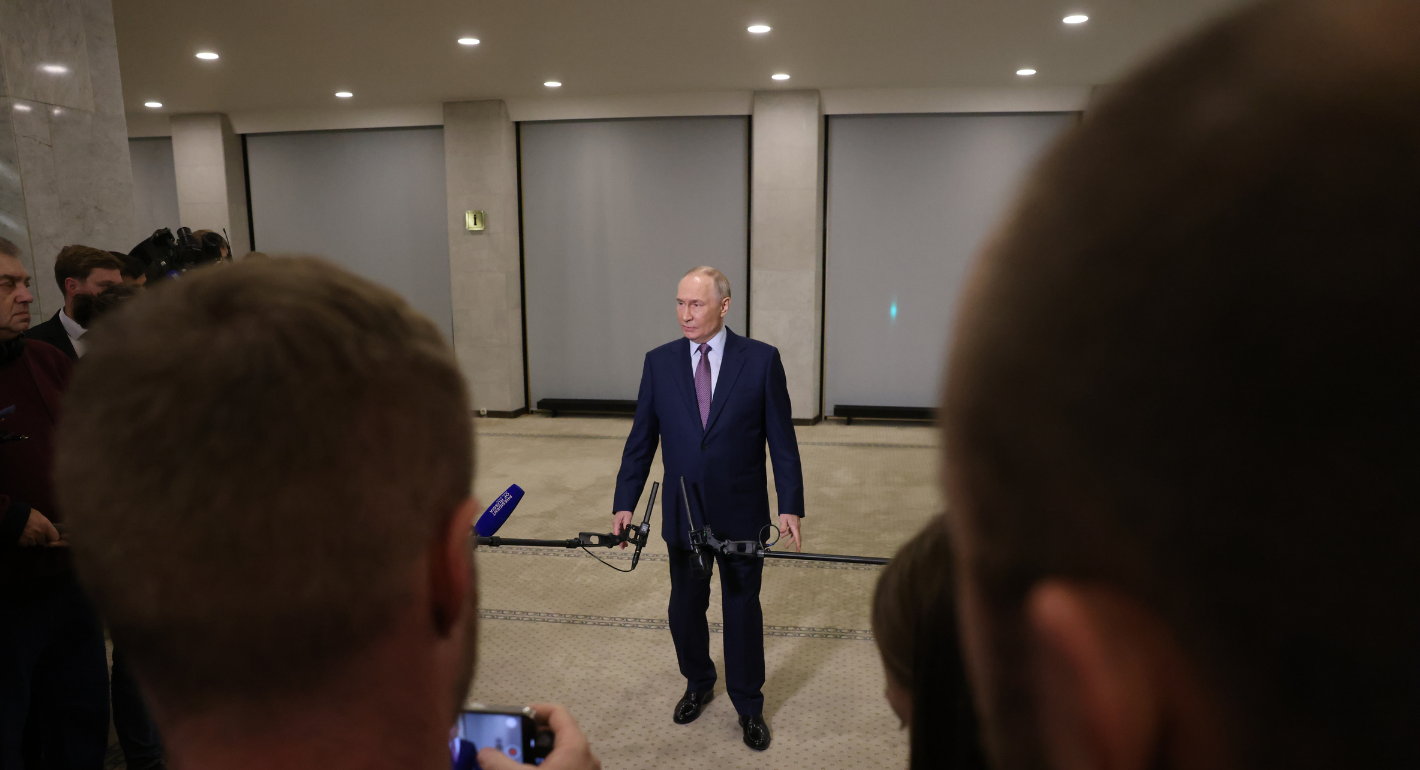
The EU had to compromise to adopt a twenty-first sanctions package against Russia, exposing growing cracks in the union’s resolve. Is this latest, weaker round worth it to keep pressure on Moscow?
Rym Momtaz, ed.

Trump is distracted and Ukraine wants Europe to step up. The continent’s leaders must find their voice and assert it in talks with Russia.

Alissa de Carbonnel

Mounting economic strain and battlefield losses will not necessarily make the Kremlin less dangerous. They could instead push Moscow toward a more aggressive hybrid campaign designed to test NATO’s Eastern flank, exploit allied hesitation, and fracture European resolve.

Maksym Beznosiuk