

Commentary
Leonid Bershidsky
{
  "authors": [
    "Leonid Bershidsky"
  ],
  "type": "commentary",
  "blog": "Carnegie Politika",
  "centerAffiliationAll": "",
  "centers": [
    "Carnegie Endowment for International Peace",
    "Carnegie Russia Eurasia Center"
  ],
  "englishNewsletterAll": "",
  "nonEnglishNewsletterAll": "",
  "primaryCenter": "Carnegie Russia Eurasia Center",
  "programAffiliation": "",
  "regions": [
    "Russia"
  ],
  "topics": [
    "Domestic Politics",
    "Civil Society"
  ]
}
Source: Getty
A regime founded on force, coercion, and repression does not want its propaganda, with all its flaws of logic, omissions, and outright lies, to be competing with the most simple of all messages: Thou shalt not kill.
In 1931, the editor Carl von Ossietzky, who had returned from World War I a committed pacifist, published an opinion piece in the Berlin weekly Die Weltbühne by another former soldier who had come to detest war, Kurt Tucholsky.
“For four years, there existed an area of square miles in which murder was obligatory, while just half an hour away, it was strictly forbidden,” wrote Tucholsky. “Did I say ‘murder?’ That is precisely what it is. Soldiers are murderers.”
For that last phrase, which has since become a radical pacifist slogan, von Ossietzky was tried and acquitted: The jury found that it could not be considered defamation since it was not directed against specific individuals.
But no sooner had Hitler come to power in 1933 than von Ossietzky found himself in a concentration camp, where he contracted tuberculosis and died in 1938, having been awarded the Nobel Peace Prize in absentia.
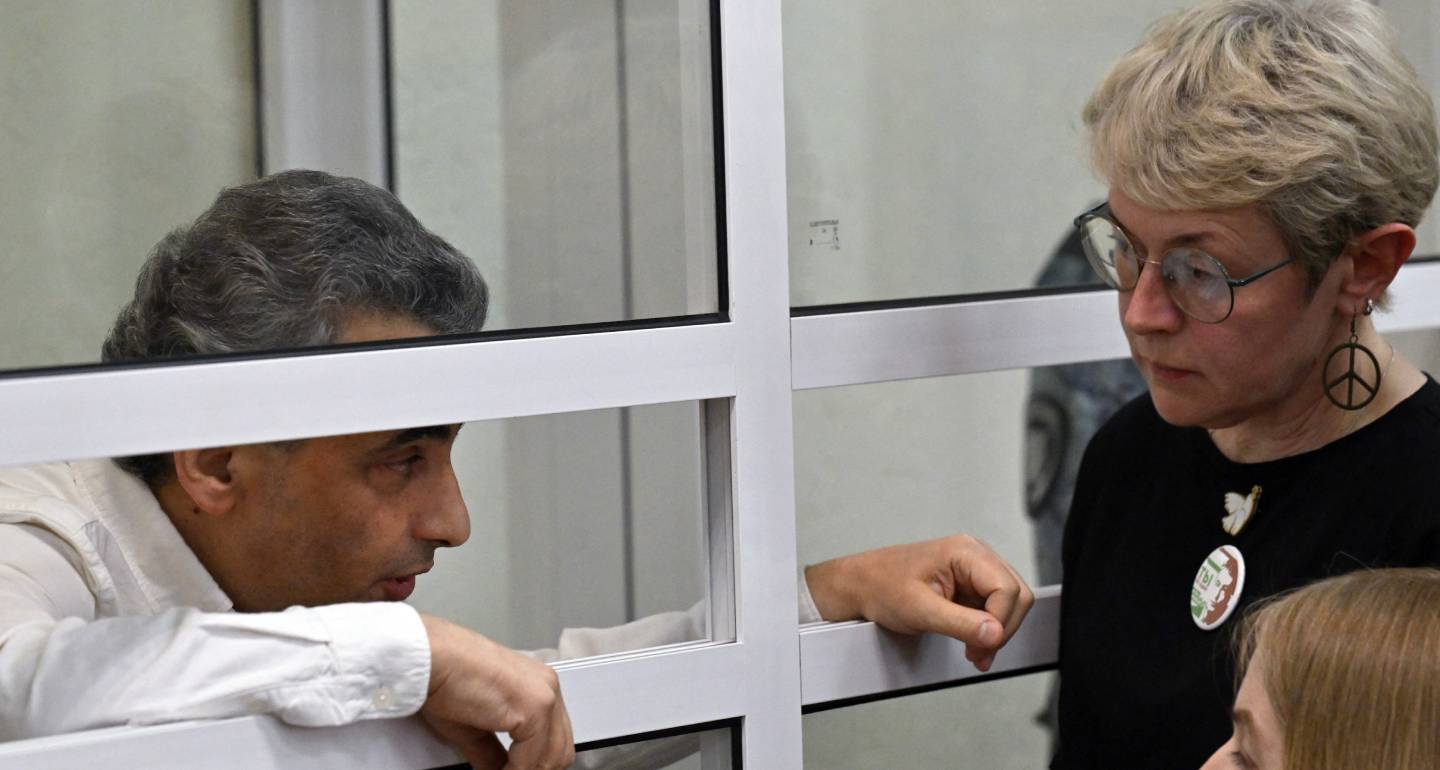
In today’s Russia, people can be convicted of “discrediting the armed forces” for a lot less than what Tucholsky said. During a debate with the historian Yuri Pivovarov, Lev Schlosberg, a politician representing the liberal party Yabloko, argued that those involved in war are not murderers, as Tucholsky would have it, but victims of war. Schlosberg was charged with discrediting and disseminating false information about Russia’s armed forces, and on August 17, he was sentenced to eleven years in prison.
In his closing speech at his trial, Schlosberg spoke of a soldier’s right not to kill and to survive. “The state propaganda machine is spreading an extremely dangerous myth that the main right of serving military personnel is to die, the right to be killed, as though none of these people have the right to life,” he said.
From Schlosberg’s point of view, victory has no value compared with the lives sacrificed to pay for that victory. That makes the Russian opposition politician and like-minded individuals the enemies of both sides. Neither the fate of Schlosberg, nor that of the Yabloko party, which has been barred from standing in next month’s parliamentary elections, have elicited much sympathy in either Ukraine or the West because of interpretations that pacifist thinking equates the aggressor with the victim and has as much sympathy for Russians killed in the war as for Ukrainians.
It’s unlikely, however, that Schlosberg would have found himself behind bars in Ukraine for his convictions, and in Western countries, parties running under pacifist slogans (at both ends of the political spectrum) are not barred from elections.
Pacifists represent a more serious danger to authoritarian regimes, dictatorships, and aggressors than they do to democracies and countries that are defending themselves. In the latter, voices calling for peace may find themselves stifled by harsh public criticism, but as during World War II, they do not face the threat of reprisals.
Hitler had dealt with the pacifist movement by 1933. He broke up the German Peace Society that had existed since the late nineteenth century, and its activists were persecuted or exiled. Meanwhile, in the Western countries that opposed Hitler, pacifist convictions were respected, albeit reluctantly.
In the United States and United Kingdom, an alternative to military service was offered to conscientious objectors even during World War II, and though public opinion stigmatized them, the pacifist movement persisted. The British Peace Pledge Union survived the war, though it lost a quarter of its 140,000 members between 1940 and 1945. During those same years, the Third Reich executed about 14,000 of its own citizens for refusing to fight.
Aldous Huxley, the British author of Brave New World and a staunch opponent of war, encountered difficulties both at home and in the United States, where he was denied citizenship because of his anti-war position. But neither country imprisoned him for his views. Incidentally, Schlosberg’s comments on war are strongly reminiscent of those made by Huxley ninety years earlier.
Schlosberg wrote in his blog: “The politics of war are glorified while the politics of peace are denigrated, and with one specific objective: to minimize people’s compassion for the deaths of others; to make the mass murder of some people by others an accepted norm, a habit, a custom. To make the abnormal normal in the eyes of society, to dehumanize people: That is the main task of all the parties of war.”
Huxley, for his part, wrote in his 1936 essay “Words and Behavior”: “The most shocking fact about war is that its victims and its instruments are individual human beings, and that these individual human beings are condemned by the monstrous conventions of politics to murder or be murdered in quarrels not their own, to inflict upon the innocent and, innocent themselves of any crime against their enemies, to suffer cruelties of every kind. The language of strategy and politics is designed, so far as it is possible, to conceal this fact, to make it appear as though wars were not fought by individuals drilled to murder one another in cold blood and without provocation, but either by impersonal and therefore wholly non-moral and impassible forces, or else by personified abstractions.”
Like Huxley, Schlosberg rejects pro-war rhetoric, seeing it as manipulative. What matters to a committed pacifist is individuals, not which side is right or wrong: The focus is on people over countries, and soldiers over armies. This is why the closer a warring side is to totalitarianism, the less acceptable such a viewpoint is.
A regime founded on force, coercion, and repression does not want its propaganda, with all its flaws of logic, omissions, and outright lies, to be competing with the most simple of all messages: Thou shalt not kill. For most people, killing other humans is unnatural and reprehensible. The appeal of nonviolence is a serious challenge to any militaristic rhetoric and any calls for self-sacrifice for the sake of a goal that isn’t always shared or even understood.
Those who acknowledge the unfair treatment of Schlosberg and Yabloko but still feel they need to distance themselves from their pacifist stance would do well to consider that peace activists are no less of a threat to the Russian regime than those who openly side with Ukraine and long for a resounding Ukrainian victory. Indeed, they may well be a greater threat.

Journalist
Recent Work
Leonid Bershidsky
Leonid Bershidsky
Carnegie does not take institutional positions on public policy issues; the views represented herein are those of the author(s) and do not necessarily reflect the views of Carnegie, its staff, or its trustees.

The greater threat to Zelensky comes not from Fedorov alone, but from the convergence between the former defense minister’s political campaign and the anti-corruption investigations moving ever closer to the presidential administration.

Balázs Jarábik
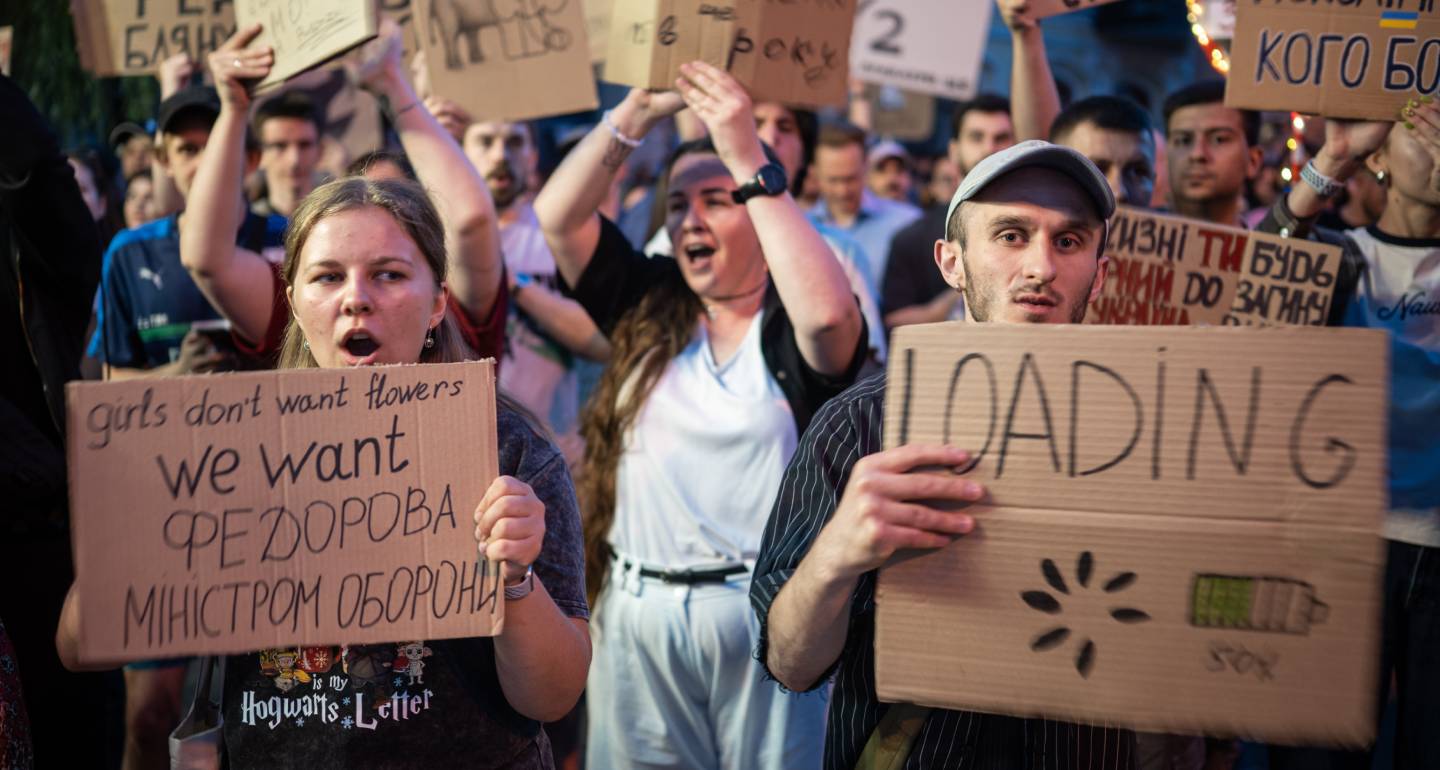
With his public call for new elections in Ukraine, ex-defense minister Mykhailo Fedorov has opened Pandora’s box.

Konstantin Skorkin
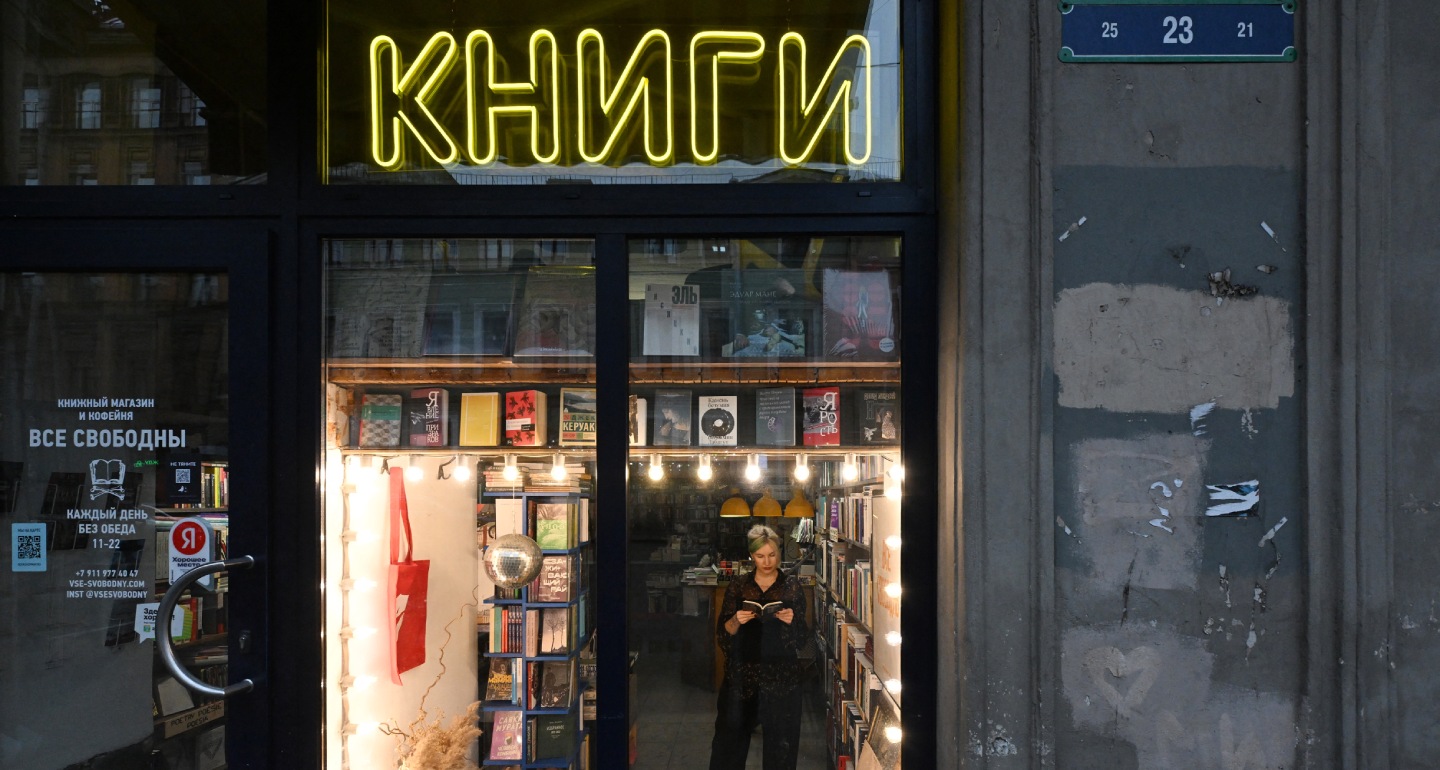
Political pressure and economic headwinds are closely intertwined problems for Russian publishers and booksellers. Together, they risk propelling Russia into a “post-literate” era.
Galina Yuzefovich

In the discussions made possible by the State Duma election campaign, one question is being asked more and more loudly. “What next?”

Andrey Pertsev

While the Nazis rushed ahead in a revolutionary fervor, Russia’s modern crusaders against enemies of the state work methodically, giving their targets time to adjust to restrictions before closing the loopholes.
Leonid Bershidsky