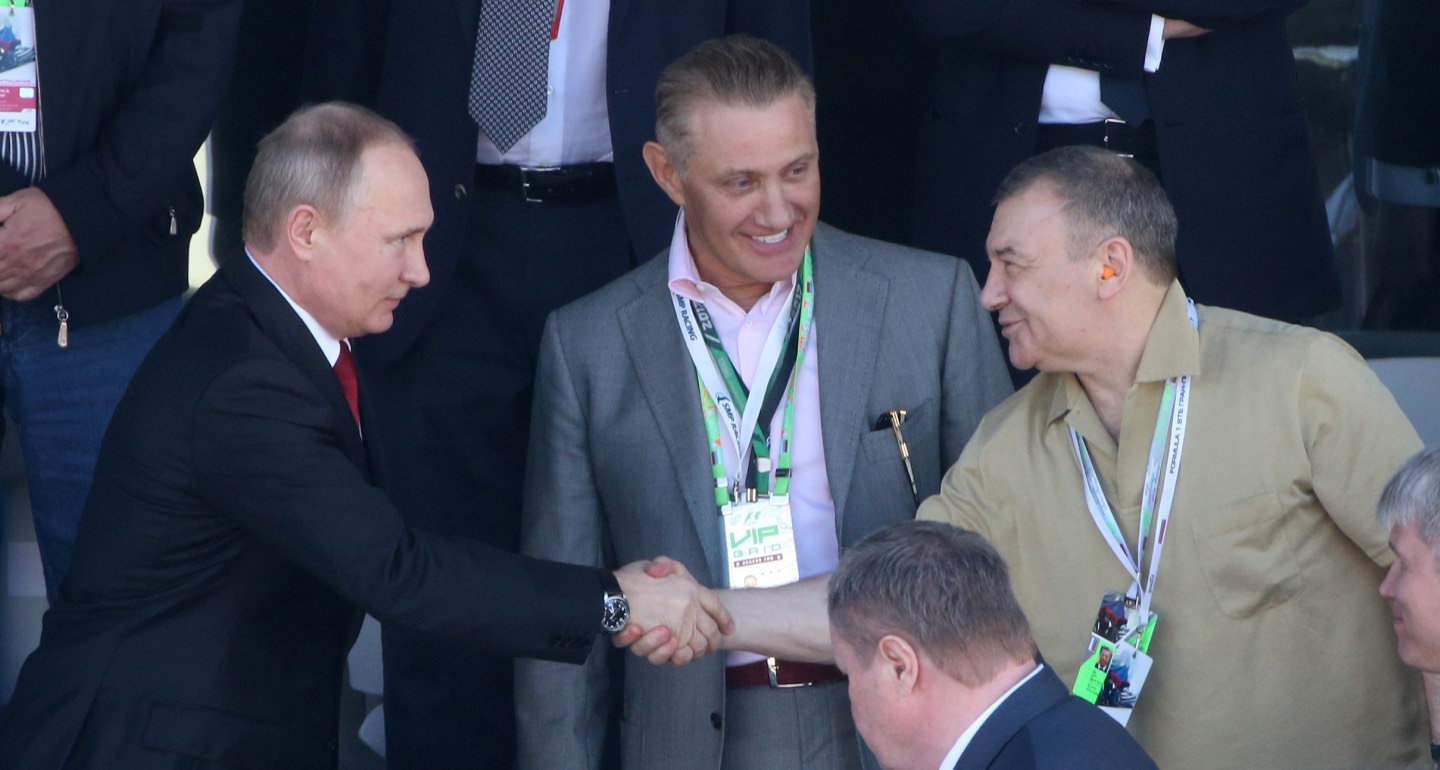
The arrest of senior members of the influential Russian political clan led by the Rotenberg brothers could have serious consequences for President Vladimir Putin’s regime. Although Arkady and Boris Rotenberg are famously long-standing friends and judo sparring partners of Putin, continuing detentions could herald a fall from grace.
What is currently happening to the Rotenberg brothers is very similar to how the elite group once headed by ex-defense minister Sergei Shoigu was taken apart in 2024. The only difference is that the Rotenbergs cannot be fired because they do not hold public office. Instead, their influence stems from control of a vast web of private and quasi-private companies, mostly in construction and transport, receiving significant state funding. These companies are able to consistently win state contracts thanks to officials in senior positions across the Russian government who are loyal to the Rotenbergs.
The attack on Shoigu began with the arrest of his right-hand man, then deputy defense minister Timur Ivanov, who oversaw procurement and was known for his lavish lifestyle. This month, law enforcement arrested Konstantin Makhov, a longtime manager of major Rotenberg projects (including a gas condensate processing plant in Ust-Luga on the Baltic Sea). Makhov was employed by Russia’s Federal Air Transport Agency (Rosaviatsia) until 2017, when he stepped down following the leaking of details about his wedding in a French chateau that was obviously beyond his means as a public official.
At the same time as Makhov, law enforcement detained Alexander Neradko, the former head of Rosaviatsia. Backed by the Rotenbergs, Neradko had led Rosaviatsia for almost fifteen years, only stepping down in 2023. Both Neradko and Makhov were arrested on embezzlement charges, accused of stealing 800 million rubles ($10.4 million) during the construction of a third runway at Moscow’s Domodedovo Airport.
However, this is likely only a preliminary figure, and the final sum of the damages—as with the Defense Ministry’s Ivanov—is likely to grow. Again, just like the purges in the Defense Ministry, the case against the Rotenberg managers was an old one that was resurrected—and it began with the arrest of more minor figures (contractors and subordinates).
For now, Makhov is the closest person to the Rotenbergs to have been detained. But the investigation is spreading through their rent-seeking network. A former deputy head of state development bank VEB, Artyom Dovlatov, was arrested in May (VEB is a vital institution for the Rotenbergs because it invests heavily in infrastructure). Mikhail Poluboyarinov, the former CEO of national carrier Aeroflot (which is also in the Rotenbergs’ orbit) was detained in June. And senior managers at SMP Bank (which the Rotenbergs sold to the state in 2022) have been questioned and had their properties searched.
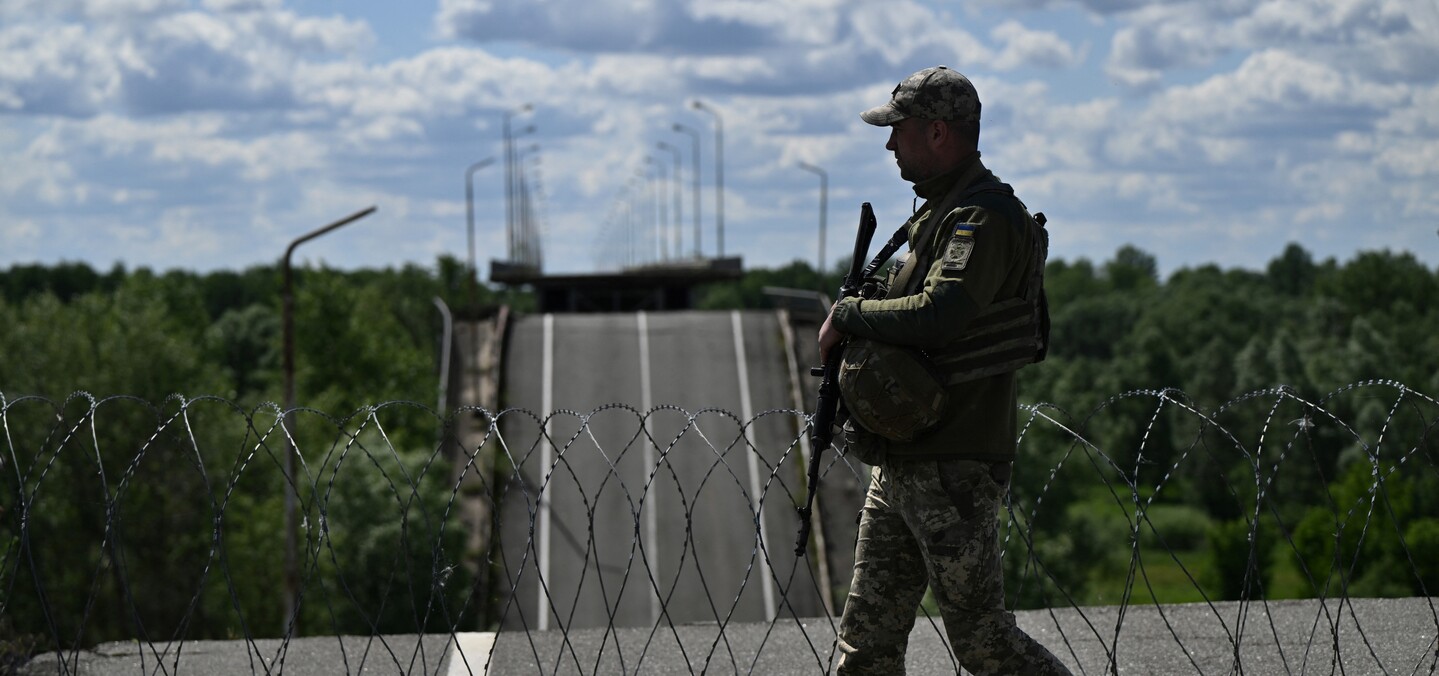
There has also been a series of arrests and deaths of former officials from the Kursk region who were linked to the embezzlement of funds from the construction of military defenses on the border with Ukraine. Detained former Kursk region governor Alexei Smirnov and deceased transport minister Roman Starovoit (who committed suicide in 2025) were all part of the Rotenberg empire—as was the Kursk region as a whole.
In other words, Russia’s security establishment is once again targeting a political clan once considered untouchable—seemingly with Putin’s blessing. As with Shoigu, various segments of the Rotenberg empire have come under attack. One of the first targets was a key manager with knowledge of the clan’s inner workings and an extravagant lifestyle. The arrests of figures like Ivanov and Makhov leave clan leaders (Shoigu and the Rotenbergs) vulnerable, even when there are no formal allegations against them.
The most likely explanation for the pressure on the Rotenbergs is that they failed to deliver on a war-related issue that was very close to Putin’s heart. The reason for Shoigu’s fall from grace appears to have been the mutiny by the Wagner mercenary leader Yevgeny Prigozhin in 2023. For the Rotenberg brothers, it may have been the embarrassing lack of fortifications in the Kursk region in 2024, when Ukraine launched a major incursion.
It’s possible the brothers thought Starovoit’s death would bring a halt to the arrests—but that did not happen. Although the case against Makhov and Neradko dates back to 2015, new material was added after Starovoit took his own life.
Admittedly, there are some differences between what happened to Shoigu and what is currently happening to the Rotenbergs. In the informal hierarchy of the Putin-era elite, the Rotenberg brothers hold a much higher position than Shoigu, and their patronage network is spread much wider. So far, most of it has escaped scrutiny.
It was their childhood friendship with Putin in Leningrad that allowed the Rotenberg brothers to win state contracts. In the quarter century of Putin’s rule, they have been involved in just about every major state infrastructure project. After the annexation of Crimea in 2014, Arkady, the older Rotenberg brother, stopped hiding his association with Putin—instead making it into another way to exert influence. The peak of their success was the construction of the bridge connecting Crimea to the Russian “mainland” (Arkady Rotenberg accompanied Putin when the president opened the bridge’s railroad in 2019).
In 2014, the brothers also acquired the profitable and ideologically significant Prosveshcheniye publishing house, which has a monopoly on Russian school textbooks. As a reward for their success (and compensation for Western sanctions), they also received profitable assets in the Krasnodar region and Crimea. This was partly why it subsequently fell to the Rotenbergs to claim they owned the estate near the southern resort city of Gelendzhik that opposition leader Alexei Navalny alleged was actually “Putin’s palace.”
At first, it seemed that the war in Ukraine would only strengthen the Rotenbergs. It has been claimed it was the brothers who put forward the idea of wartime nationalizations from which they have benefitted so much. Their interests have expanded to include the mining of rare earth metals, and the establishment of a financial hub to evade sanctions (led by exiled Moldovan oligarch Ilan Shor). They also managed to sell SMP Bank to the Defense Ministry-linked Promsvyazbank at the end of 2022. The Rotenbergs needed the money from the sale of SMP Bank to invest in the massive Ust-Luga gas condensate processing plant, which is supposed to increase Russia’s LNG production capacity by one-third. Construction on the delayed plant is projected to cost the state almost a trillion rubles.
Makhov, along with another recently detained Rotenberg manager, Stanislav Multakh, had been running the companies delivering the Ust-Luga megaproject in recent years. Accordingly, these two arrests were a double blow to the Rotenberg clan. On the one hand, law enforcement have taken out the men in charge of one of the Rotenbergs’ most important projects. On the other hand, Makhov and Neradko were detained as part of a criminal case relating to another major Rotenberg project: a third runway at Domodedovo Airport (the brothers first tried to seize control of Domodedovo twelve years ago, but they only finally took control as part of Russia’s wartime nationalizations).
It’s unclear whether the Rotenbergs will be able to halt the steamroller bearing down on them. They have two possible courses of action. The first is to hope Putin will decide sufficient damage has already been inflicted, and rein in the security services. However, the example of Shoigu shows it’s extremely hard to stop a purge once it has begun. Once they have the green light, law enforcement tend to make waves of arrests, with each wave generating material for subsequent criminal cases—and more arrests.
Their second option is to try to atone for their failure by delivering on a project close to Putin’s heart. The problem here, though, is that there is no public information about the Rotenbergs having any successful ventures directly linked with the war in Ukraine.
Even before Andrei Belousov was appointed defense minister, he managed to ensure that the Rotenbergs were excluded from drone production. During an April 2023 meeting with drone manufacturers, Putin criticized Rosaviatsia (curated by the Rotenbergs) as ineffective. That meeting was mainly orchestrated by Belousov, with Rosaviatsia’s then head Neradko not even invited. Within six months, Neradko had been fired. As a result, the only drones that Rotenberg-linked companies produce today are training drones for use in Russian schools.
The Rotenbergs’ attempt to contribute to the war effort by sponsoring a mercenary unit—a 2022–2024 trend among tycoons—also ended in failure. The brothers financially backed the Espanola brigade of right-wing football hooligans, but the venture was not a success. The Defense Ministry failed to absorb the unit, disbanded it in 2025, and some of its leaders have been detained. Without any major war-linked projects, the Rotenbergs have nothing with which to impress Putin.
While the security forces will need a very long time to fully dismantle the enormous rent-seeking network built up by the Rotenbergs over the last quarter of a century, what happened to Shoigu means some clan members are already jumping ship. Ex-transport minister Yevgeny Ditrikh left his post at a major Rotenberg company at the end of 2025 to become a senator for the Nizhny Novgorod region (lawmakers have immunity from prosecution). Ex-deputy prime minister Vitaly Savelyev, who spent his career working in Rotenberg-linked aviation enterprises, likely had the same thought when deciding to run as a United Russia candidate in the upcoming State Duma elections.
These sorts of moves by key members of the Rotenberg clan do not instill confidence in its future. But the situation is typical of how, in the fifth year of the full-scale war in Ukraine, the Russian elite reacts to heightened levels of unpredictability and rising personal risks.